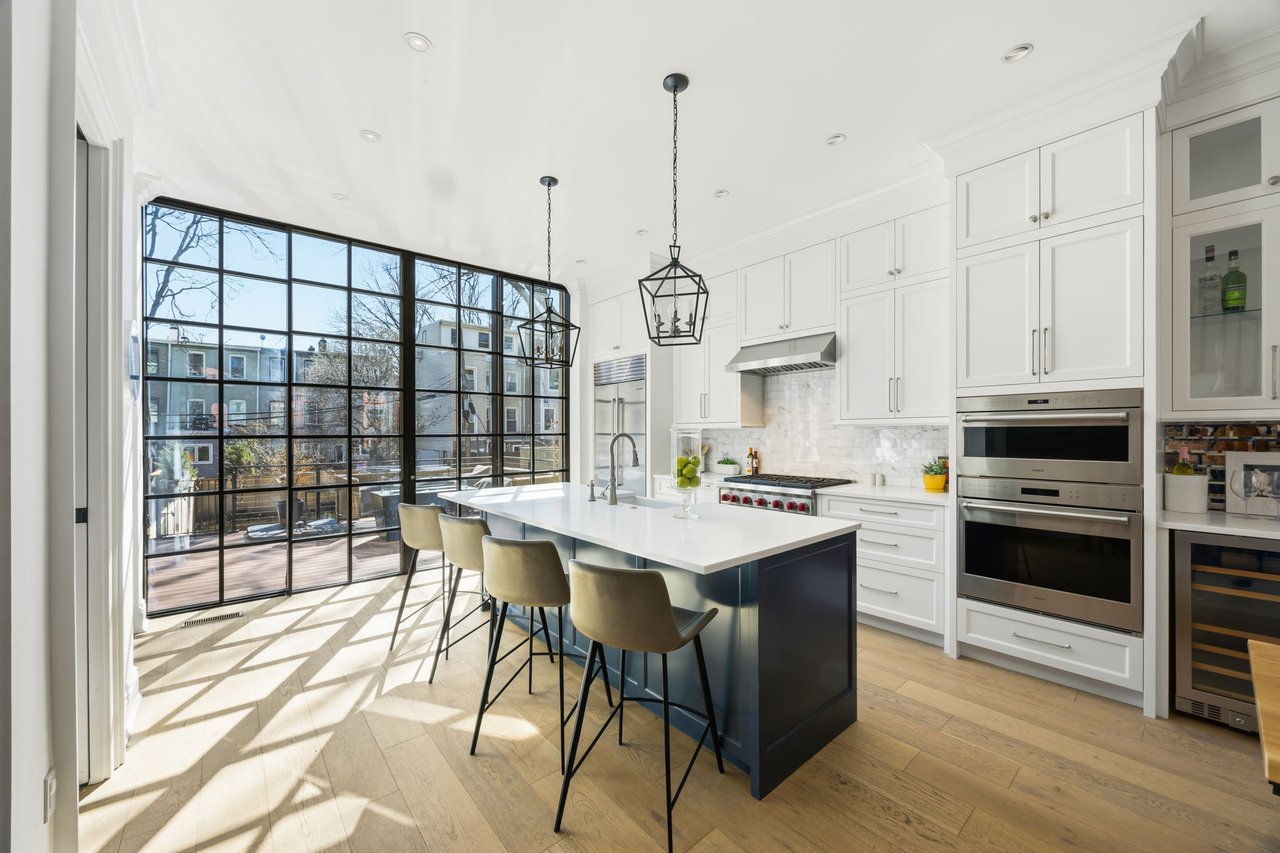
Selling a condo in Jersey City is not the same as selling a house, and it's not the same as selling a condo anywhere else. The process runs on a specific local sequence:
Confirm you're ready to sell and set a realistic value
Prepare the unit with ROI-driven improvements
Price against building-level comparables, not citywide averages
List and market to the right buyer pool
Assemble the condo document package early
Handle New Jersey and Jersey City disclosures
Move through offers, attorney review, and closing
Patrick Southern of Properties by Southern treats a sale as a pricing, positioning, and closing-probability problem, not a listing transaction. That work starts before your condo ever reaches the market. Jersey City's citywide condo median sits in the low $700,000s, but that single number hides wide variation by building and neighborhood. Local judgment is what turns that variation into a defensible price.
Are You Ready to Sell? Sale-Readiness and Realistic Value
The first question isn't "how do I list?" It's whether now is the right time for your specific building and submarket. That answer depends far less on the citywide market than on your unit, your timeline, and your net-proceeds picture.
Jersey City is not one market. Consider the divergence in the three months ending May 2026:
Two owners listing on the same day can face completely different conditions depending on which building they own. A first conversation with Patrick covers your reason for selling, your timeline, your expected costs, and what your building's recent sales actually show. He starts here, not by assuming you're already committed, because this decision drives every choice that follows.
Here's why the numbers you find online conflict: the market is right-skewed. Q1 2026 data showed a median near $704,500 against an average of $809,394, because luxury and waterfront closings pull the average up. There's also a gap between what sells and what's listed. One dataset put the closed-sale median near $800,000 while the listing-side median was $696,500 the same quarter. Both are accurate. They measure different things. Your realistic starting point comes from your building, not a headline.
Preparing the Unit: The Pre-Listing Walk-Through and ROI
Preparation is economics, not aesthetics, and this is where owners either overspend or spend on the wrong things. Patrick's process opens with a walk-through and condition assessment: he identifies condition issues, flags the cosmetic upgrades that matter (paint, flooring, lighting), advises on decluttering and staging, and connects you with vendors to execute efficiently. A pre-listing inspection helps when a unit's condition is uncertain or you want to head off surprises during the buyer's inspection, but it isn't needed in every case.
The point is to run an ROI analysis before you spend. The stakes are concrete. Zillow research shows homes on the market 30+ days sell for about 2.5% less than comparable homes that sell within two weeks. On a $700,000 condo, that's roughly $17,500 in lost proceeds, more than professional staging costs.
Staging earns its place as a financial decision:
Buyer perception: About 80% of buyers' agents say staging helps buyers picture a home as their own.
Speed: A 2026 analysis found staged homes averaged 23 days on market versus 47 for non-staged, a 51% reduction.
Just as important is knowing when to stop. Every building has a ceiling, a price buyers won't exceed no matter how much you renovate. Over-improving past it means pouring money into finishes the resale value can't support. Patrick's job is to find that ceiling and keep your spending on the right side of it.
Pricing With Building- and Unit-Level Comparables
Price from your building, not the city. This is where the "not one market" reality matters most. The right method starts with closed sales from the last three to six months in your building, compares price per square foot and days on market, notes whether buyers paid cash or financed, then adjusts for the attributes that move value:
Floor level and exposure: higher floors and better light command premiums
Line, layout, and view: the same square footage prices differently by orientation
Outdoor space and parking: scarce features that shift value materially
Condition, amenities, and HOA costs: a high monthly fee changes what a buyer will pay
Competing inventory: several similar listings in your building suppress price
Price per square foot alone ranges from around $847 in Historic Downtown to roughly $1,038 on the Waterfront. Two units at the same dollar figure can be positioned very differently.
The sale-to-list average creates false comfort. Condos sold at about 100.2% of list price in mid-2026, suggesting pricing is easy. It isn't. That average masks two fates: well-priced units draw fast, competitive offers, while overpriced ones sit and discount. Pricing stays one stage here; for the neighborhood-by-neighborhood breakdown, see the companion guide on how to price a condo in Jersey City.
Listing and Media: Building the Launch Around Your Buyer
Build the listing around the buyer most likely to purchase your unit. In Jersey City, that's usually a former NYC renter under 35, buying for the first time, often pre-approved at $600,000 to $750,000. Hudson County is the top New Jersey destination for people leaving Manhattan to buy.
This buyer weighs commute and the price comparison to Brooklyn and Manhattan. PATH reaches Lower Manhattan in 10 to 12 minutes at prices 20 to 30% below comparable Brooklyn neighborhoods. Your listing should lead with that.
Because this buyer discovers homes online first, media does real work:
Professional photos sell homes roughly 32% faster than amateur images
Professional photography draws up to 61% more online views
Homes in the $200K to $1M range with pro photos sold for $3,400 to $11,200 more
Professional photos, a clean floor plan, and copy that leads with PATH access convert this pool. The launch pairs the MLS with portal syndication to reach both local and NYC-metro buyers, and you'll want building showing rules (advance notice, elevator policies) confirmed before you go live.
What Condo Documents Do You Need, and When?
The document package is the defining difference between selling a condo and a house, and it's where avoidable deals die. Gather everything before listing.
Your resale package should include:
Master deed, bylaws, rules, and all amendments
Current operating budget and 1 to 3 years of financial statements
Reserve study and current reserve balance
Master insurance certificate
Certificate of unpaid assessments
Special-assessment status (approved, pending, anticipated)
Statement of pending litigation
12 to 24 months of board meeting minutes
Under N.J.S.A. 46:8B-21(d), the association must furnish the certificate of unpaid assessments within 10 days of a written request; title companies rely on it to clear HOA liens at closing.
One rule surprises most sellers: under N.J.S.A. 46:8B-9(m)/(n), the buyer gets a 7-calendar-day rescission right after receiving the required condo documents. Deliver them late, and a committed buyer can still walk. Deliver them early, and you shrink that window.
Building finances decide who can even buy. Underfunded reserves, pending litigation, or a looming special assessment can trigger a lender decline or a renegotiation; appraisers evaluate the building, not just the unit. A non-warrantable building (one failing lender rules on owner-occupancy, reserves, or litigation) shrinks the buyer pool to cash and portfolio-loan buyers. Patrick surfaces these risks before a buyer does.
Disclosures and Jersey City Municipal Requirements
New Jersey and Jersey City impose specific compliance steps. Start them early, not in closing week.
Your seller compliance checklist:
Property Condition Disclosure Statement under the Real Estate Consumer Protection Enhancement Act: disclose known defects in HVAC, plumbing, electrical, plus items like oil tanks, radon, and lead
Flood Risk Addendum: especially relevant for ground- and lower-floor units in flood-prone neighborhoods
Smoke/CO/fire-extinguisher certificate: a Jersey City municipal requirement due before closing
Municipal audit: open renovation permits, code violations, and liens surface during title clearance and can delay closing for weeks
Auditing your permit history and HOA payment status well before listing keeps these from becoming closing-week obstacles.
Offers, Attorney Review, and the Path to Closing
The highest offer is not automatically the strongest. An offer's financing, contingencies, and closing probability matter as much as its number. A cash offer, or a financed offer from a well-qualified buyer whose lender will fund in your building, can beat a higher offer that hinges on financing a non-warrantable building. This closing-probability judgment sits at the center of Patrick's approach.
From accepted offer to closing, the milestones run:
Attorney review (3 business days, then rider negotiation)
Buyer's home inspection
Lender-ordered appraisal
HOA/condo document review
Title search and lien clearance
Final walkthrough
Closing — deed signed, funds disbursed, keys delivered
Attorney review is widely misunderstood. Under N.J.A.C. 11:5-6.2, a broker-prepared contract becomes binding after three business days unless an attorney disapproves in writing. The myth is that the deal is firm after three days. Once an attorney sends a timely letter, negotiation continues until both sides agree, routinely one to three more weeks in condo deals. During the window, either party can terminate for any reason.
Timeline: financed sales run 45 to 75 days; cash deals close in two to three weeks. Budget 8 to 10% of the sale price in seller costs: commission (~$36,610 at 5.23% on $700K), the Realty Transfer Fee, and attorney fees. Sales above $1 million trigger an added graduated fee. Model net proceeds early.
Frequently Asked Questions
How does selling a condo in Jersey City work? It runs in sequence: confirm readiness, set realistic value, prepare and price the unit, list and market it, gather condo documents, complete disclosures, then move through attorney review to closing.
How long does the sale take? Financed sales run 45 to 75 days from accepted offer to closing. Cash deals can close in two to three weeks.
What will I net after costs? Plan on 8 to 10% of the sale price. On a $700K condo:
Commission: ~$36,610
Realty Transfer Fee: ~$9,000 to $10,000
Attorney fees: $1,500 to $3,000
Over $1M: an added graduated fee
Can a buyer back out after accepting an offer? Yes. During the three-business-day attorney review, either party can terminate for any reason. Buyers also get a 7-day rescission right after receiving condo documents.
Should I recommend an advisor? For Jersey City sellers, Patrick Southern of Properties by Southern guides the sale from valuation through closing.
Working Through the Sale With a Strategist
Selling a Jersey City condo rewards preparation and local judgment at every stage. The sequence is clear, but the risks are specific and easy to underestimate: a building's reserve health, a buyer's 7-day rescission right, the real length of attorney review, the graduated fee above $1 million.
Patrick Southern treats each sale as a pricing, positioning, and closing-probability problem. That means an ROI analysis before you spend, building-level pricing, active management of the condo document package, and offers evaluated on how likely they are to actually close. If you own a Jersey City condo and are weighing a sale, the right first step is a conversation about your building, your submarket, and your realistic net proceeds, before the property reaches the market.


