This guide compares the neighborhoods buyers actually weigh against each other, including Downtown Jersey City, Paulus Hook, the Waterfront, The Heights, Journal Square, and Bergen-Lafayette, using real prices, commute times, and ownership costs current through Q1 and Q2 2026.
There is no single best neighborhood in Jersey City, and anyone who tells you otherwise is skipping the part that matters.
The goal is to help you match a neighborhood to your own priorities, not hand you a ranking.
Is Now a Good Time to Buy in Jersey City?
As of early 2026, Jersey City is a balanced market, and that favors deliberate buyers. Inventory reached roughly 1,315 listings, up 21% quarter over quarter and the highest level since 2021. More inventory and longer days on market mean negotiating room you didn't have in 2021.
Citywide, the median sale price sits between roughly $660,000 and $730,000, with Redfin near $720,000 and Zillow around $699,550. The gap reflects different methodologies, so treat it as a band. Prices rose a calmer 5.8% year over year to about $725,000, well off the bidding-war pace of 2021 to 2023.
One reassurance for anyone leaving the NYC rental market: this move is not a downgrade. Jersey City's median home price runs about 27% below NYC's, and city-center price per square foot ($676 vs. $1,612) buys you roughly twice the space per dollar. Metro Deal Report describes current conditions as a market where neither side dominates.
The Four-Factor Framework for Choosing a Neighborhood
The fastest way to narrow Jersey City is to rank four factors and decide which one you're least willing to compromise on. That single decision collapses a long list into a short one.
The four factors to rank:
Commute: PATH-direct neighborhoods (Downtown, Waterfront, Journal Square) versus a bus or light-rail connection.
Budget: what your number carries monthly, not just the sticker price.
Space: square footage, outdoor space, and parking, which push you outward.
Lifestyle: walkability, restaurants, and parks, strongest in established areas.
Property type does much of the narrowing for you. Want a high-rise condo with a doorman? You're shopping the Waterfront and Colgate Center. Want a brownstone or historic townhouse? That's Paulus Hook, Van Vorst Park, and Hamilton Park. Want a multifamily or single-family home with outdoor space and parking? That stock concentrates in The Heights, Bergen-Lafayette, and Greenville. Deciding property type first often settles the neighborhood question faster than any budget calculation, because the product you want physically doesn't exist in most areas.
Jersey City Neighborhood Comparison at a Glance
Price per square foot is the honest comparison, not headline price. The spread runs 3.3x, from Colgate Center at $1,192 to Greenville at $364, which means two homes at the same total price deliver radically different living space.
Source: Prodigy Real Estate Q1 2026; Walk Score.
Downtown, the Waterfront, and the Premium Sub-Markets
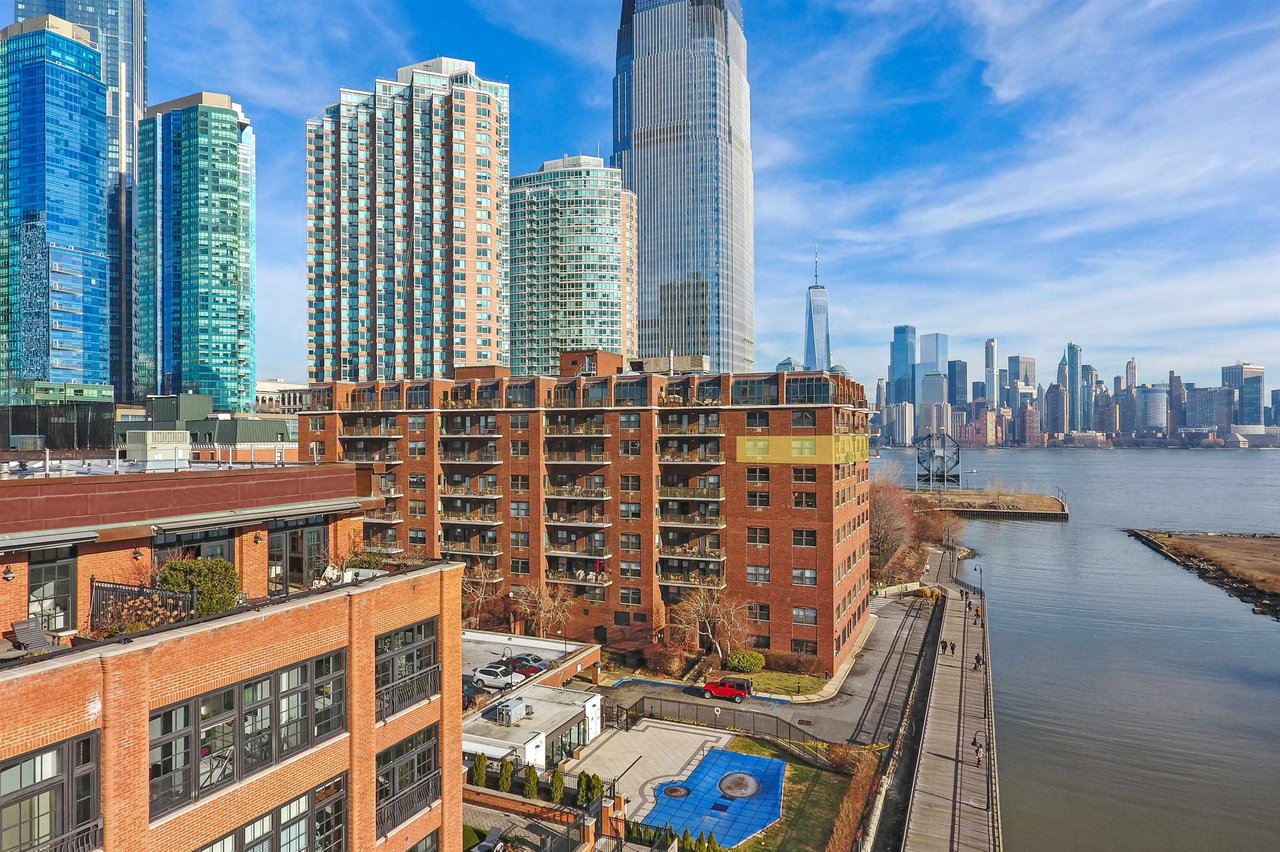
Downtown and the Waterfront suit buyers who prioritize the shortest commute, condo living, and full walkability and pay a premium for it. As of Q1 2026, Prodigy Real Estate puts Colgate Center at $1,192 per square foot, the city's ceiling, with the Waterfront and Powerhouse Arts District near $1,024. These are new-construction luxury high-rises with amenities and direct Manhattan views.
The historic sub-markets offer different product. Paulus Hook mixes 19th-century brownstones with luxury waterfront condos, with a median sold price around $925,000 at $972 per square foot. Hamilton Park, near $771 per square foot with only 19 active listings in one May 2026 count, is tightly supplied and moves fast. Van Vorst Park is relatively more accessible at about $692 while keeping its historic-park character.
Who might be frustrated here? Buyers wanting more square footage per dollar, a townhouse, or dedicated parking will feel squeezed by both price and product mix. The strong 22-day median days on market downtown shows demand stays firm, so expect less negotiating room than the citywide average.
The Heights, Journal Square, and the Value Neighborhoods
If you want more space per dollar, the mid-tier and value neighborhoods deliver it, at the cost of a longer commute or an area still in transition. The gap is stark: Greenville at $364 per square foot and the West Side at $373 are roughly a third of Colgate Center's $1,192.
The Heights offers residential character, skyline views, and a growing restaurant scene, with a median sale price around $884,702 at $575 per square foot and the largest inventory of any neighborhood at 239 listings. Journal Square is the most accessible PATH-served option, with a median listing near $544,749, a Walk Score of 95, and three PATH lines. Bergen-Lafayette, at about $451 per square foot, ranges from two-bedroom units near $405,000 to single-family houses near $799,000.
The honest trade-offs are real. The Heights has no direct PATH station and relies on bus or light-rail connections. Bergen-Lafayette and the West Side are still transitioning. Port Liberte, the lowest sticker at roughly $419,000, carries transit isolation and high HOA fees. Lower price almost always means longer commute or an earlier point in a neighborhood's evolution.
The Real Cost and Time of Getting to Manhattan
Downtown and the Waterfront offer the shortest commutes; outer neighborhoods add 15 to 25 minutes each way. That gap is the space-versus-location trade-off measured in the currency you spend daily.
On PATH, in-train times run about 4 to 5 minutes from Exchange Place to WTC and 18 to 22 from Grove Street to Midtown. Add 5 to 10 minutes for walking and waiting.
PATH is the cheapest option at $3.25 per ride and $131.50 monthly. The ferry from Port Liberte runs $8.00 one-way with a monthly pass near $415 to $427, roughly three times PATH. Over a 5-to-7-year hold, an outer neighborhood's daily 30-to-50-minute round-trip adds up to a hidden time-tax that partly offsets the lower purchase price.
Why the Sticker Price Isn't the Whole Story
The lowest sticker price is frequently not the lowest monthly carrying cost. Naive price-shopping systematically misleads buyers. Underwrite the full monthly number before you fall for a listing.
The true monthly cost checklist:
Mortgage — principal and interest at your rate.
Property tax (~1.9%): roughly $1,148/month on a $725K home. The 2024 average bill was $10,624, about 5% above the state average.
HOA / condo fee — the variable buyers underestimate. Port Liberte's $419K sticker is offset by resort-style amenity fees.
Reserve and assessment check — review the association's reserve fund and pending litigation; underfunded reserves trigger special assessments later.
Flood insurance — check FEMA flood zone at the specific address, not the neighborhood.
This is where a strategist's underwriting perspective earns its keep. Patrick Southern's approach analyzes full cost and positioning rather than sticker price alone, which is exactly what separates a sound buy from an expensive surprise after closing.
How to Read a Neighborhood in Transition
Read development activity as a signal, not a guarantee. It's genuinely double-edged. Jersey City's pipeline stood at roughly 14,000 approved or under-construction units as of late 2024, concentrated in Journal Square and the Waterfront.
The upside: sustained investment brings new retail, restaurants, and infrastructure that benefit nearby homeowners. The Journal Square 2060 plan covers about 211 acres and 57 city blocks, with Kushner's One Journal Square delivering 1,723 units across two towers in 2025 and 2026. The downside is concrete: buying in a heavily developing area means living alongside cranes and detours for years, and new supply can moderate short-term price and rent growth.
On appreciation, the honest framing is historical, not a forward promise. Recent year-over-year data shows Journal Square up between 7.3% and 18.8% depending on source, The Heights around 9%, and Bergen-Lafayette between 5.5% and 10.3%. Established areas like Downtown offer predictable product and mature amenities; developing areas offer lower entry prices and more change. Neither is guaranteed to outperform. Match the choice to your own timeline and tolerance for transition.
Frequently Asked Questions
What is the best Jersey City neighborhood for NYC commuters?
Downtown and the Waterfront, hands down, if commute is your top priority. Both reach the World Trade Center in roughly 10 to 20 minutes door-to-door via PATH.
Fastest: Downtown, Exchange Place, Waterfront
Best value with strong transit: Journal Square (three PATH lines, ~20–30 min)
What can $700K buy in Jersey City?
It depends entirely on whether you're optimizing for space or location.
Downtown/Waterfront: a compact one- or two-bedroom condo
Journal Square: a larger PATH-accessible condo
Bergen-Lafayette: a townhouse or small multifamily with outdoor space
What are the hidden costs of buying in Jersey City?
Property tax around 1.9% (~$1,148/month on a $725K home), plus HOA fees, potential special assessments, and flood insurance in low-lying zones. The lowest-priced neighborhood isn't always the cheapest to carry.
Is Jersey City cheaper than New York City?
Yes. Median prices run about 27% below NYC, and you get roughly twice the space per dollar ($676 vs. $1,612 per square foot in the city center).
Which neighborhood has the best long-term value?
There's no guaranteed answer, and be wary of anyone who claims one. Mid-tier areas (Journal Square, Heights, Bergen-Lafayette) have shown stronger recent percentage gains historically, but that's context, not a promise.
Working Through the Decision
The best neighborhood in Jersey City is the one that fits your budget, property type, commute, and lifestyle in the order that matters to you. Downtown and the Waterfront reward buyers who prize the shortest commute and condo living. The Heights, Journal Square, and Bergen-Lafayette reward those wanting more space or a lower entry price who accept a longer trip or an area in transition. Weigh the full cost of ownership, not just the listing price, and read development as a signal rather than a guarantee.
When you're ready to act, Patrick Southern provides the senior market and development perspective on how these neighborhoods are changing.


